
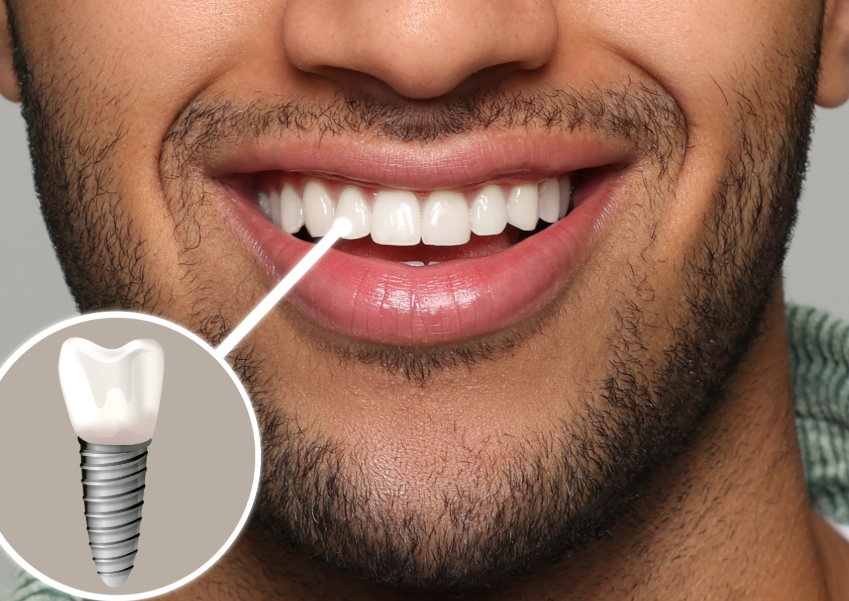
Dental implants are designed to replace missing teeth so well that they can look and function much like natural teeth. So, if you suddenly notice sensitivity around an implant, you may understandably wonder, “How can that happen when my implant doesn’t even have a nerve?”
The key is that the implant itself isn’t usually what’s feeling sensitive. Instead, discomfort may be coming from the gums, jawbone, implant crown, or another nearby tooth. And while some tenderness is expected during the early healing process, new or persistent sensitivity deserves your dentist’s attention.
The Implant Itself Doesn’t Have a Nerve
A natural tooth contains nerves that allow you to feel sensations such as heat, cold, and pressure. A dental implant is different. The titanium implant post doesn’t contain a dental pulp or nerve, so it cannot experience sensitivity in the same way a natural tooth does.
However, the tissues surrounding the implant can still become irritated or inflamed. That means you may perceive discomfort as coming from the implant even when the actual source is nearby.
Healing Can Cause Temporary Tenderness
If your implant was placed recently, some soreness or tenderness is generally part of the healing process. Your gums and jawbone have just undergone a procedure and need time to recover.
Mild discomfort should gradually improve as the tissues heal. The important word here is “improve.” Pain or sensitivity that gets worse instead of better, persists well beyond the expected healing period, or suddenly appears after your implant has been comfortable should be evaluated.
Your Gums May Be Irritated
Inflammation around an implant can also cause tenderness. Plaque buildup can irritate the gum tissue surrounding an implant, just as it can around natural teeth.
In some cases, inflammation can develop into peri-implant disease, which can affect the tissues and bone supporting the implant. Redness, swelling, bleeding, gum recession, or discomfort around an implant should therefore never be ignored.
Your Bite Could Be Putting Too Much Pressure on It
Sometimes the issue isn’t an infection or healing problem at all. Your implant crown may be receiving more biting pressure than it should.
Because an implant is anchored directly into the jawbone rather than suspended by the periodontal ligament found around a natural tooth, it responds differently to chewing forces. An uneven bite can place excessive stress on the surrounding tissues and cause discomfort when you bite or chew.
Your dentist can evaluate your bite and determine whether an adjustment is needed.
It May Not Actually Be the Implant
A nearby natural tooth could be the source of what you’re feeling. Gum recession, tooth decay, or sensitivity in an adjacent tooth can sometimes make it difficult to pinpoint exactly where discomfort originates.
That’s another reason not to diagnose the problem yourself. Your dentist can examine the implant, surrounding gums, neighboring teeth, and supporting bone to determine what’s actually happening.
Don’t Ignore Implant Sensitivity
Call your dentist if your implant becomes painful, feels loose, hurts when you bite, or is surrounded by swollen or bleeding gums. These symptoms can indicate a problem that should be addressed before it becomes more serious.
Dental implants can provide years of reliable function, but protecting that investment means paying attention to changes in your mouth. Sensitivity may turn out to be something simple to address, but getting it checked early is always the smarter approach.
When something doesn’t feel right around your implant, your dentist can help you get to the bottom of it.
About the Practice
Deerfield Dentist, lead by Dr. Mark Jacob, provides comprehensive dental care in Deerfield, Illinois, including dental implants for patients who need to replace missing teeth. The practice focuses on personalized treatment planning and helping patients achieve comfortable, functional smiles.
Through its dental implant services, the practice can evaluate patients who are considering implants as well as those who have concerns about an existing implant or restoration.
Call us at (303) 663-9600 or schedule your appointment online.